
What Is Radiofrequency Microneedling?
Take ordinary microneedling and add a second injury — that's the honest one-line version.
The needles are insulated along their length and conduct energy only from the tips, so heat is delivered at a chosen depth rather than through the surface. Your skin now has two things to repair: the puncture, and a small controlled thermal zone underneath it. The repair response is correspondingly larger.
The surface is comparatively spared, which is the main reason this approach exists. Older resurfacing technology got its results by damaging the top of the skin, with the pigment risk that implies. Delivering the heat below the surface gets more of the benefit with less of that particular danger.
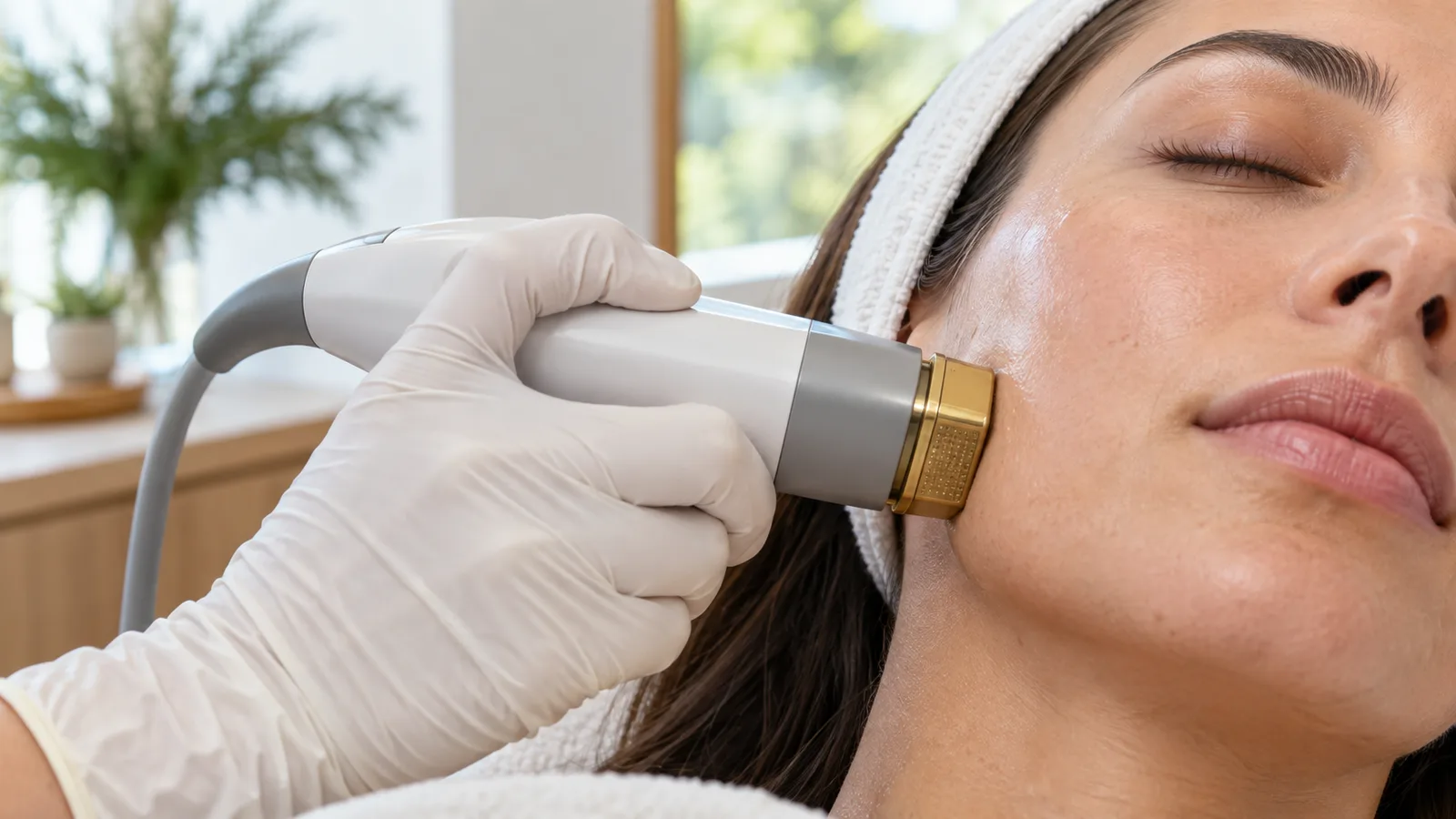
What it's genuinely good for
Mild to moderate laxity, especially along the jawline and under the chin. This is the strongest indication and the one where the premium over standard needling is easiest to justify.
Acne scarring, where the combination of mechanical and thermal injury does more for depressed scars than needling alone.
Texture and pore visibility, particularly in the lower face.
Enlarged oil glands and the thickened skin that comes with long-standing congestion.
What it is not is a substitute for surgery. Moderate laxity improves. Significant sagging does not, and the honest version of that conversation should happen in your consultation rather than here.
What a session involves
Numbing cream for half an hour or so. A device passed across the face in sections, with depth and energy adjusted by region, which is where the operator's judgment lives. Most people describe heat and pressure rather than sharp pain.
Afterwards your face is red and hot for the rest of the day, often with a visible grid pattern from the tips that fades over one to three days. Swelling is likeliest the morning after. Expect to look noticeably treated for roughly seventy-two hours.
Results arrive slowly. Some tightening is apparent early from the swelling, then it goes away and you feel cheated, then the real collagen change accumulates over three to six months. A course is typically three sessions spaced a month or more apart.
Who shouldn't have it, and what to ask
Anyone with an active infection in the area, anyone pregnant, anyone recently on isotretinoin, and anyone with an implanted electrical device. Keloid tendency is worth raising. Deeper skin tones are generally treatable with appropriate settings, which makes the operator's experience with your skin type a fair question.
Then ask these.
Which device, and what depth range are you using on my face.
How many of these do you perform monthly, and on skin like mine.
What's the total for the course, not the session.
What would you expect this to achieve in my case, described in words rather than in photographs of other people.