
Microneedling
Think of this section as a ladder. Each rung adds something to the basic treatment, usually more energy or another ingredient, and each rung costs more in money and in recovery than the one below. The most common mistake is someone starting three rungs up because a clinic's menu put the fancy option first.
The bottom rung is simple needling. A device pushes fine needles into the skin to a chosen depth. Your skin reads that as a small injury and repairs it, laying down collagen over the following weeks. Nothing is removed. Results come from your own healing, slowly, across a course of sessions rather than a single visit.
Everything above that rung is a variation on the same idea.
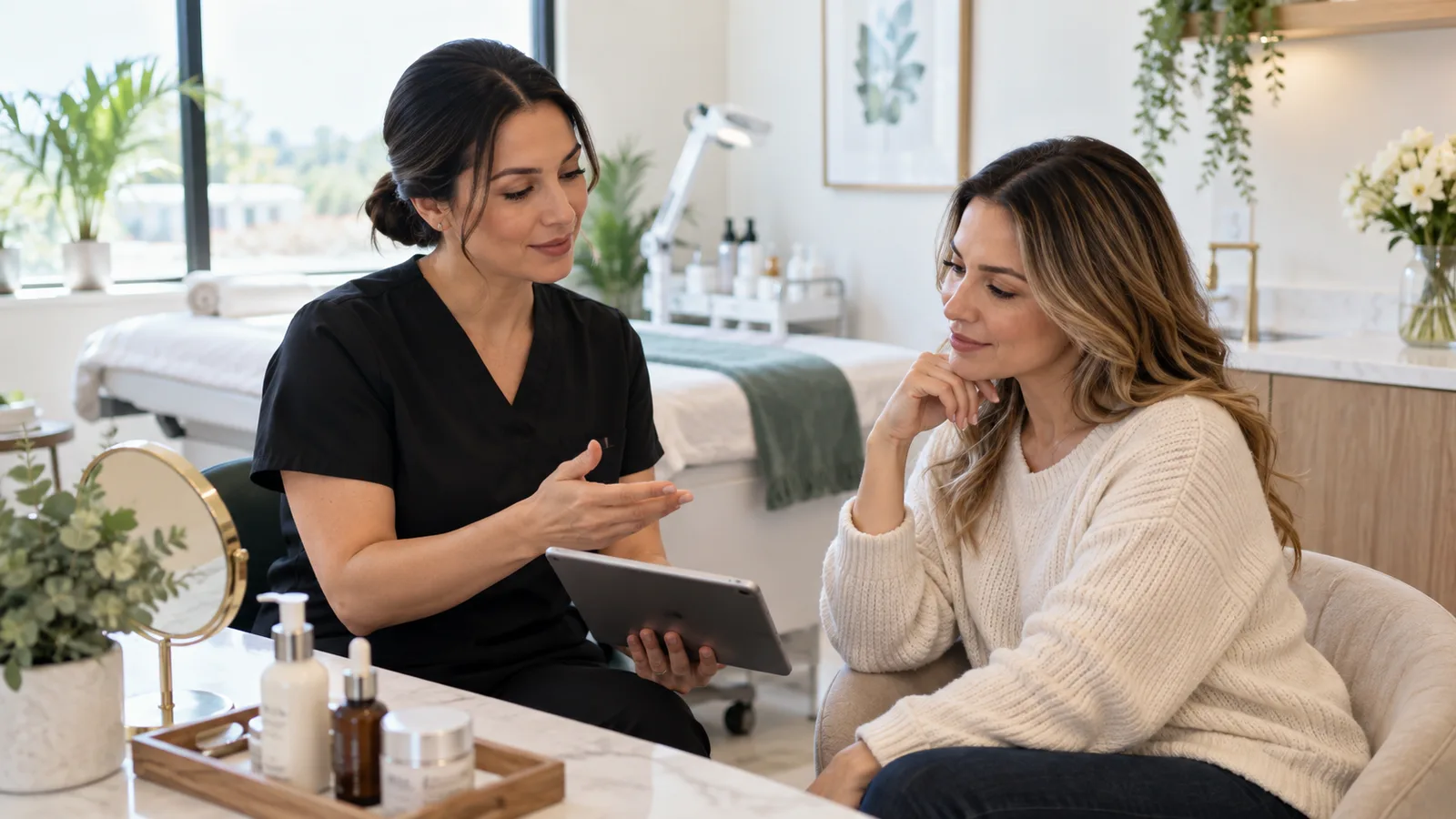
Rung one: plain needling
What Treatments Help With Large Pores? is where most people enter this section, and it's a fair place to start. Pores look large for several reasons, and needling helps with only some of them. Congested pores often respond better to a retinoid and a salicylic acid routine at home. Pores that look stretched because the skin around them has lost support are where needling earns its fee. The page has two quick tests you can do with a finger and a mirror to work out which kind you have before you spend anything.
Rung two: adding plasma
What Is The Downtime After A PRP Facial? covers the version where a small amount of your blood is spun down and the plasma is applied during needling. The key point is that recovery comes from the needling, not the plasma. So if you've been told a PRP facial means extra healing time, or no extra time, the depth of the needles is what actually decides it. The page lays out what each day tends to look like, including the second day, when swelling often peaks and nervous messages start arriving.
Whether the plasma adds enough to justify its price is a separate question. Ask any clinic to explain, in plain terms, what they expect it to change for your skin specifically.
Rung three: adding heat
What Is Radiofrequency Microneedling? describes needles that deliver heat at their tips. The heat is aimed at deeper tightening and at scarring, and it brings more downtime and a clearly higher bill. For mild texture concerns it's often more than you need. For looser skin along the lower face, it can be a reasonable option. The page covers who shouldn't have it and the questions that separate a careful clinic from one that owns the device and wants to use it.
The top of the ladder
What Is The Best Non-Surgical Skin Tightening? is the page about the ceiling. Every energy device has a limit, and past it no amount of extra sessions moves the needle much. A lot of money gets spent above that line. The page also separates laxity from volume loss, because a face that looks tired from lost volume won't be fixed by tightening, however many rounds you buy.
Choosing your rung
Start low and climb only when the lower rung has had a fair trial. A fair trial is usually a full course, judged from photographs taken in the same light, a few months after the last session. Most people judge far too soon.
Ask every clinic what depth they plan to use, on which areas, and why. Ask what result they'd call a success, in words, before you pay. Ask who operates the device and what their training is. If the conversation jumps straight to a package price, you haven't had an assessment yet.
Watch the sun as well. Freshly needled skin burns easily and can darken in patches, particularly on darker skin tones. Mornings on the ridge face east over the water, and that reflected light counts even on a cool day.
Checking a clinic before the first rung
A practice appearing in a business directory like the North Jersey Chamber of Commerce is registered and contactable. That's useful, and it's also the limit of what a listing proves. Ask separately who is licensed to perform the treatment. To see whether a place has changed ownership or closed recently, West New York News - ABC7 New York is often more current than the clinic's own site.