
Can I Get A Chemical Peel In Summer?
Yes, within limits, and the limits are about depth and behaviour rather than about the month on the calendar.
Skin that has just been peeled is temporarily worse at defending itself against ultraviolet light, and the melanin response to injury is heightened for weeks afterwards. Summer isn't inherently forbidden. It's that summer makes the two things that go wrong more likely to go wrong: burning freshly treated skin, and provoking pigment where you were trying to remove it.
So the real question isn't the season — it's how much light your next month contains.
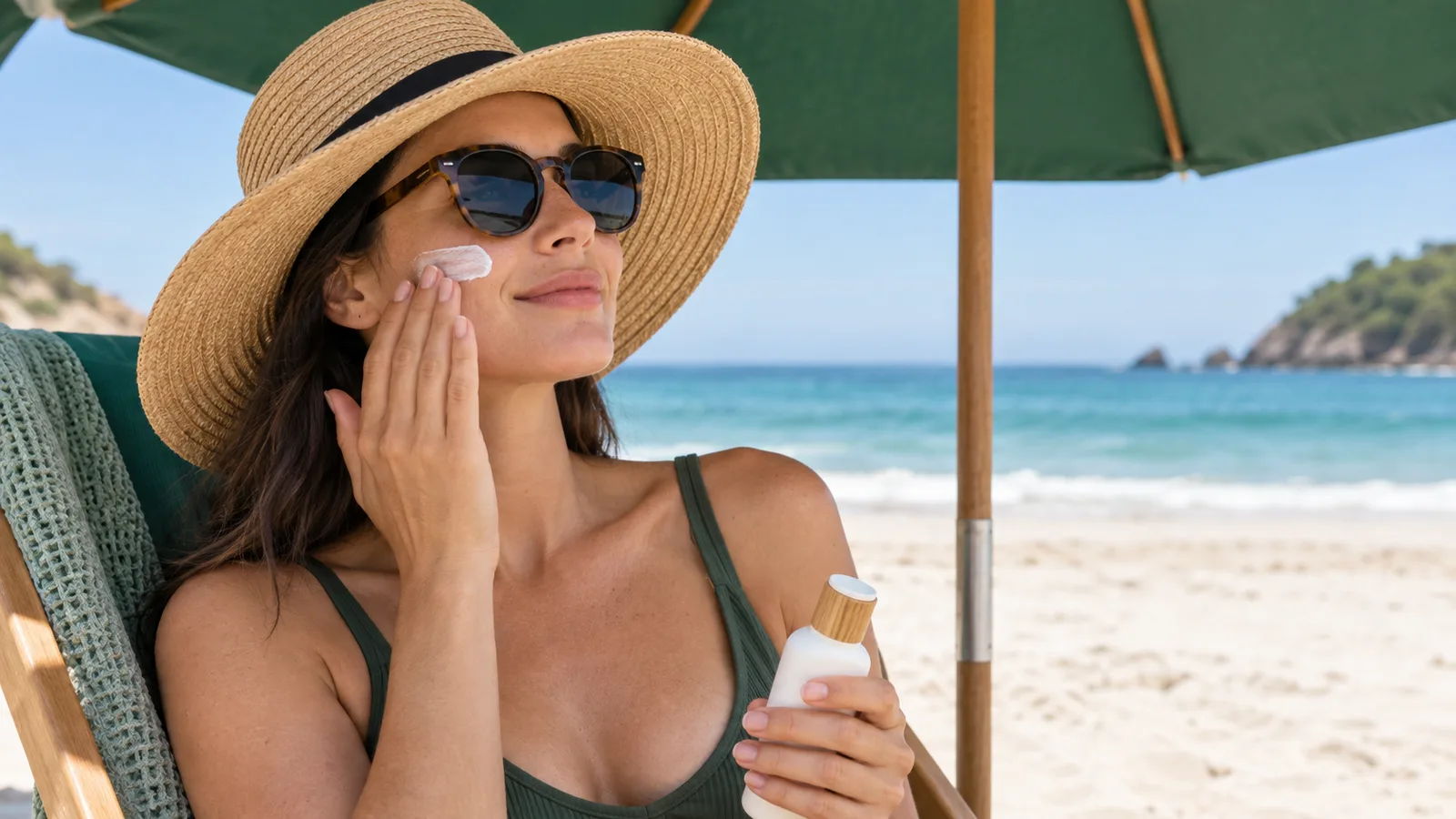
Where the line usually falls
Superficial work generally proceeds year-round. Light glycolic, lactic and salicylic treatments do not strip enough of the barrier to make normal, protected summer life a problem, provided you actually protect it.
Medium-depth work is where most practitioners start pushing the date. Trichloroacetic acid at working strength leaves you photosensitive through a week of visible recovery and several more weeks of heightened pigment risk. Plenty of good clinicians will still do it in July for someone whose life is genuinely indoors. Plenty will decline, and the decline is defensible.
Deep work is a different category and a different conversation, almost always scheduled for the cold months.
Pigment-directed treatment, at any depth, tilts the whole calculation towards autumn. Melasma especially. Treating melasma into strong light is how people end up worse off than when they started.
Judge your own exposure honestly
Not your intentions. Your actual next six weeks.
Do you walk the ridge in the mornings. Does your commute leave you standing on an open platform. Is there a beach weekend already booked, a wedding outdoors, a child's fixture with no shade anywhere near it. Does your desk face the river.
That last one matters more up here than people expect. An open eastern slope with a mile of water in front of it delivers a second dose of light by reflection, and reflected ultraviolet doesn't care that you're wearing a hat. A block with buildings on both sides is a materially different environment from the top of the boulevard.
Add it up. If the honest answer is that you cannot keep your face out of strong light for a month, then the season has answered the question for you regardless of what the clinic is willing to book.
If you go ahead
Sunscreen becomes non-negotiable rather than advisable, reapplied through the day, with the neck and the underside of the jaw included because that's where reflected light lands.
Physical shade beats chemical protection. A wide brim does more than a higher number.
Skip the tan entirely, before and after. Treating recently tanned skin raises the risk of exactly the pigment problem you're trying to avoid.
Follow the priming plan if you were given one. Weeks of preparation with a pigment-suppressing regimen is not an upsell, it's the thing that keeps the result from rebounding.
And plan the week itself. Work out which days you'll be shedding and check what's already in the diary for them.
The practical advice
If it's superficial and you're disciplined, book it whenever suits you.
If it's medium depth, and especially if pigment is the target, wait for the light to drop. Late autumn and winter give you a wider margin for the same money, and the result won't be any less good for having been delayed.
Then use the summer for the unglamorous half: get the priming regimen established, get the sun protection habitual, and arrive in October with skin that's ready. The people who get the best out of peels are the ones who did three months of boring work before the appointment.
If you'd rather read the evidence on post-inflammatory pigmentation yourself instead of trusting a summary of the timing, the West New York Free Public Library System will get you into the journals. And for what's actually happening in town across a given week, ABC7's West New York coverage will tell you which weekends you've already lost to something outdoors.