
What To Ask At A Med Spa Consultation
A consultation is an interview — and you are conducting it. Most people arrive with the roles reversed, answer questions for forty minutes, and leave having agreed to a plan they didn't examine.
Here's the list. It's grouped by what each answer is actually telling you, and the whole thing takes about five minutes to work through.
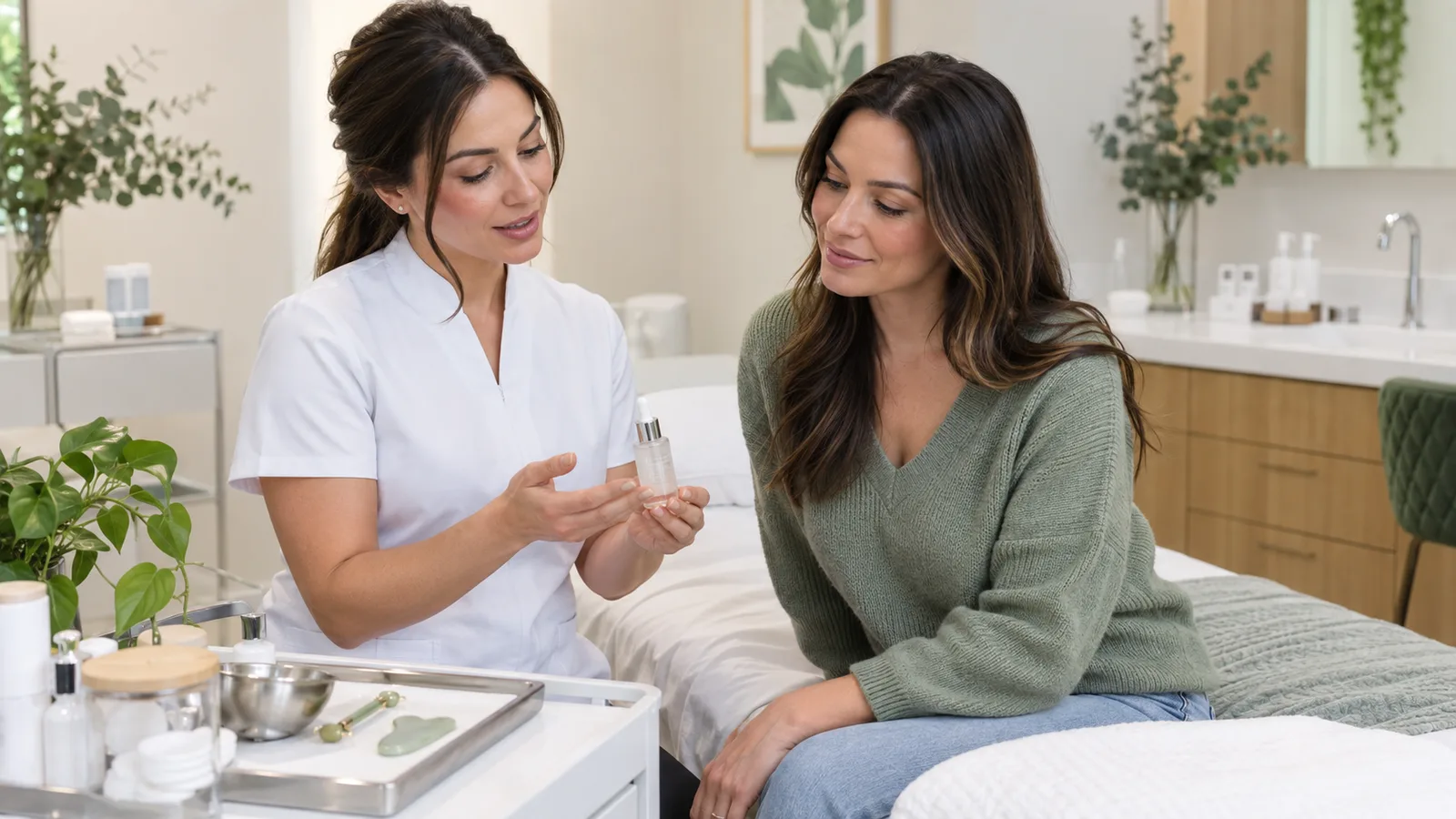
Before anyone describes a plan
Who will be performing the treatment, and what licence do they hold in New Jersey.
Is there a supervising physician, and are they on the premises on treatment days.
How long has the person treating me been doing this specific procedure, and roughly how many do they perform in a month.
These three come first for a reason. If the answers are unsatisfactory, nothing after them matters, and you've spent ninety seconds rather than an afternoon.
About the treatment itself
What exactly are you recommending, and what is it meant to change.
Why this rather than the alternatives, and what are the alternatives.
What product, what dose or depth, and in which areas.
What does it cost, in full, including any follow-up.
How long until I see a result, and how long will it last.
What does the recovery look like, day by day, and what's the worst day.
What would make you refuse to treat me.
That last one is the most informative question on the list. A practitioner who has a ready answer has a threshold. One who doesn't, doesn't.
About what happens when something goes wrong
What are the risks specific to me, given my history and my skin.
What's your protocol for a vascular occlusion, and is hyaluronidase kept on site.
Who do I call out of hours, and what's the realistic response time.
If I'm unhappy at two weeks, what happens, and is the review included.
Do you have before-and-after photographs of people with faces like mine, rather than your most dramatic results.
Ask the occlusion question even for treatments where it isn't relevant. The quality of the answer tells you how the practice thinks about risk generally.
How to run the appointment
Say at the outset that you're not booking today. It changes the shape of the conversation immediately, and any practice that reacts badly has told you something.
Write the answers down, in the room. It looks serious because it is, and it means you can compare two consultations properly instead of comparing two impressions.
Bring your medication list, including supplements, and your treatment history including anything you disliked.
Take the quote away and read it somewhere else. Same-day discounts that expire when you leave are a pressure technique, and a good practice will still be there next week at the same price.
And see more than one place. The single most useful thing about a second consultation is that it makes the outlier visible, and you cannot identify an outlier from a sample of one.
The thing to listen for
Less the content of the answers than the manner. You want fluency, specificity, and a willingness to say no. You want the examination to come before the proposal, and you want to be told which items on your own wish list are getting declined.
What you don't want is a consultation that arrives at package pricing without anyone having looked at you properly.
Take the list through whichever door you walk. Given how short the trip is from the ridge, booking one consultation with Ethos in Hoboken alongside one or two on this side is an easy way to get a comparison, and comparison is the entire point.
One practical note on scheduling: if the plan that comes out of all this involves visible recovery, check the calendar before you pick a date, and the outlooks at the National Weather Service if the week involves being outdoors.
Separately, for the plain question of whether a place is a registered local business, a roll such as the North Jersey Chamber of Commerce will confirm it.
A directory like the Hudson County Chamber of Commerce covers the same ground county-wide. Neither one has anything to say about who is qualified to treat you.